How to Calculate Stair Rise and Run
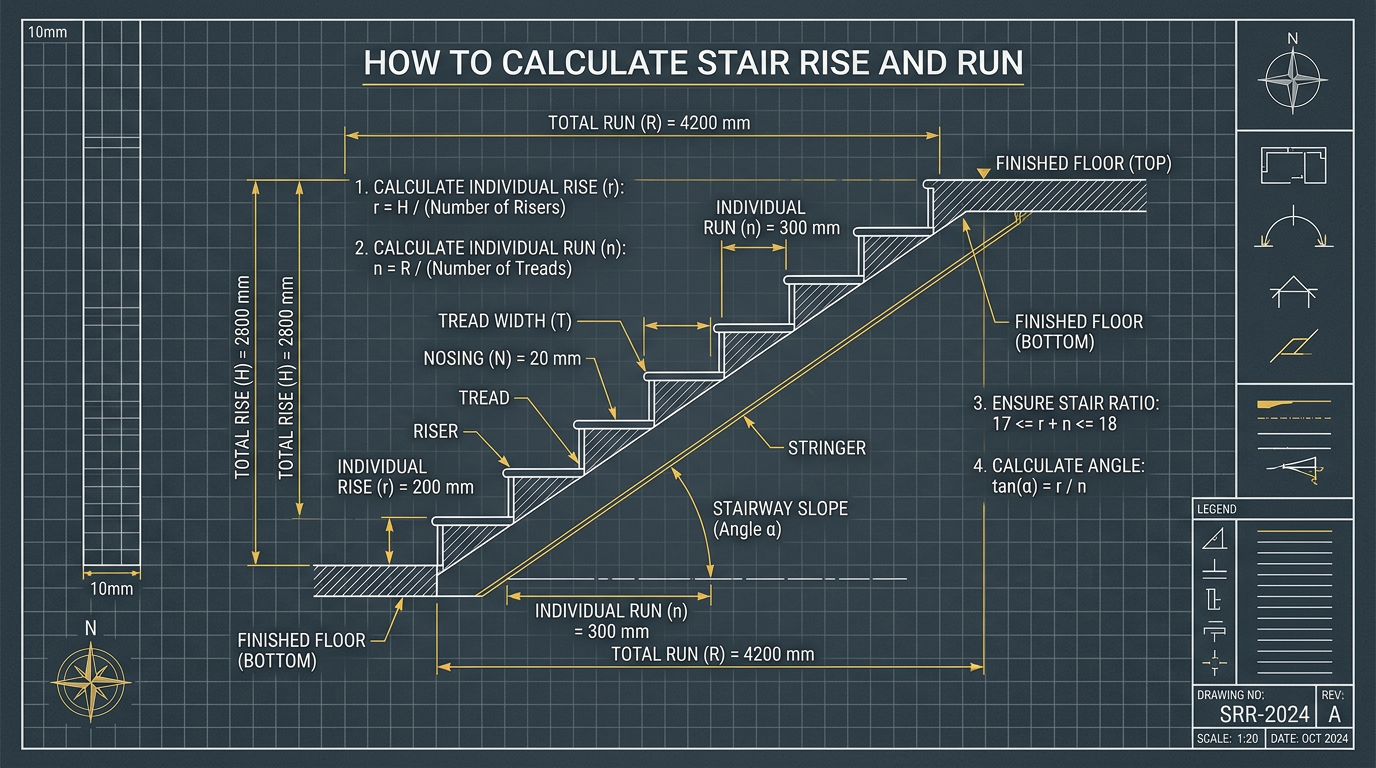
Quickly find the riser height, tread width, and total number of steps based on total rise.
Master the Math of Stair Building
Building stairs is one of the most challenging tasks in carpentry. It requires absolute precision, as even a 1/4 inch error can create a dangerous trip hazard. This guide breaks down the industrial standards for "Rise and Run" so you can build with confidence.

1. Identify Your Total Rise
Before you touch a calculator, you need the Total Rise. This is the exact vertical distance from the finished lower floor to the finished upper floor. It is critical to account for the thickness of your flooring (hardwood, tile, etc.) on both levels.
2. Standard Code Requirements (IRC)
To ensure safety and accessibility, most residential building codes (International Residential Code) mandate:
- Maximum Riser Height: 7 ¾ inches
- Minimum Tread Depth: 10 inches
- Consistency: The greatest riser height within any flight of stairs shall not exceed the smallest by more than 3/8 inch.
3. The "Comfort" Rule of Thumb
Pro builders use the 7-11 Rule: A 7-inch riser and an 11-inch tread create the most comfortable walking cadence. Alternatively, follow the 2R + T = 25 rule (Two Risers + one Tread should equal approximately 25 inches).
4. Reading Your Results
- Actual Riser: Our tool calculates the exact riser height to ensure every step is identical.
- Number of Treads: You will always have one fewer tread than risers, as the top riser meets the upper floor/landing.
- Stringer Length: This is the diagonal length of the board you'll need to buy (usually a 2x12).
5. Stringer Layout Tips
When you're ready to cut:
- Use Stair Gauges: Clamp these onto your framing square to ensure every notch is perfectly identical.
- Account for Tread Thickness: Remember to "drop the stringer" by Subtracting the thickness of one tread from the very bottom riser height.
- Double Check: Measure twice, cut once. If your bottom step is a different height than the others, it's code-violating and dangerous.
Industry data feed active. Integrated sponsor slots reserved for verified partners.
Support the Blueprint
DIYLookup is built for builders by builders. Help us keep the math open-source and the site ad-free by supporting our mission.